The market for vintage Berkel slicers has changed considerably over recent decades, as has their value. Some models that were once easier to source have become much rarer, while interest in antique Berkel slicers has gradually expanded from professional use to design and collecting.
Original Slicers has witnessed this evolution first-hand through years of sourcing, restoring and selling historic Berkel slicers.
How the market for vintage Berkel slicers has changed over the past 30 years
To understand the current value of a vintage Berkel slicer, it helps to look at how the market has changed. When a delicatessen, butcher’s shop or restaurant closed, it was sometimes possible to acquire slicers that were still in use, complete with their original components.
Over the years, Original Slicers built up a stock of fully original vintage Berkel slicers, acquired when complete, working examples were still available. These machines, collected from almost 20 years ago onwards and carefully kept since then, are the slicers we restore and offer to our customers today.
“Twenty-five years ago, you could find more or less every model. You would look for a particular model and find it. That is no longer the case today.”
— Antonio, Original Slicers
Sourcing vintage Berkel slicers now takes much longer. The availability of different models, the number of surviving examples, demand and the profile of buyers have all changed. Some examples available on the market are incomplete or require substantial work. For anyone looking for a Berkel to restore, the challenge also lies in finding a machine in suitable condition.
First-hand experience gained over many years makes it possible to trace this evolution and understand why certain Berkel models now hold a distinctive place in the vintage and collectors’ market.
From professional equipment to functional art and collectors’ pieces
Berkel slicers were developed as professional machines, designed to meet specific slicing and operational requirements.
Until the 1990s, enquiries came mainly from people who intended to use the slicer in their business. In subsequent years, enquiries from private buyers interested in the history and design of these models also increased. Interest in Berkel slicers has therefore extended beyond their original purpose. Design, build quality, mechanical engineering and historical significance have helped turn some vintage Berkel slicers into collectable objects, finding a place in restaurants and professional settings as well as private collections and carefully designed interiors.
This is the concept of functional art. Objects designed for practical use also acquire cultural and collectable value through their aesthetic, technical and historical qualities. Alongside categories traditionally associated with luxury and collecting, such as classic cars, watches, jewellery and design objects, examples of functional art can also be sought after for their rarity and enduring appeal.
Why some antique Berkel slicers have become increasingly rare
Some Berkel models are now almost impossible to find compared with 20 or 30 years ago. Several factors help determine how rare a Berkel slicer model is, including its production period, the number of examples still available and their surviving condition.
Some models remain available on the market. For others, finding a complete example in a condition suitable for restoration has become much more difficult.
For example, the Model L is now almost impossible to find, the Model 3 is very difficult to source and the Model B remains rare. In Antonio’s experience, strong demand over the years has contributed to the declining number of available examples.
What determines the value of a vintage Berkel slicer?
Several factors influence Berkel slicer value, including the availability of the model, buyer interest, the condition of the individual machine, its completeness and originality, and the quality of any restoration work. As a model becomes harder to source while interest remains strong or increases, its position in the market can also change. Changes in value therefore need to be considered alongside changes in demand and the availability of individual Berkel models.
Two slicers of the same model can consequently receive different valuations. A complete example with its original components has a different appeal to collectors from one with missing or replacement parts. Where available, the documentation accompanying the machine also helps establish its identity.
Originality is an important factor when valuing an antique Berkel slicer. Missing components, alterations made over time, inappropriate work or non-original parts can affect how the machine is assessed overall. A complete example that is consistent with its model and production period can be particularly appealing to collectors.
Understanding the machine’s originality is therefore closely connected to understanding its value.
How does restoring a vintage Berkel slicer affect its valuation?
Restoration is an important chapter in the history of many vintage Berkel slicers, and the work carried out can vary considerably.
A restoration must take account of the mechanics, the specific characteristics of the model and the original elements that remain on the machine. The quality and appropriateness of the work can therefore help preserve its historical and collectable value.
For example, Original Slicers’ plating process involves layers of copper, nickel and chromium. Omitting the intermediate layers may produce a similar-looking finish that is more likely to peel over time.
When assessing a restored Berkel, the way the work was carried out is therefore particularly important. The quality of the finishes, care for the mechanics and consistency with the model affect the result and the likelihood of further work being needed.
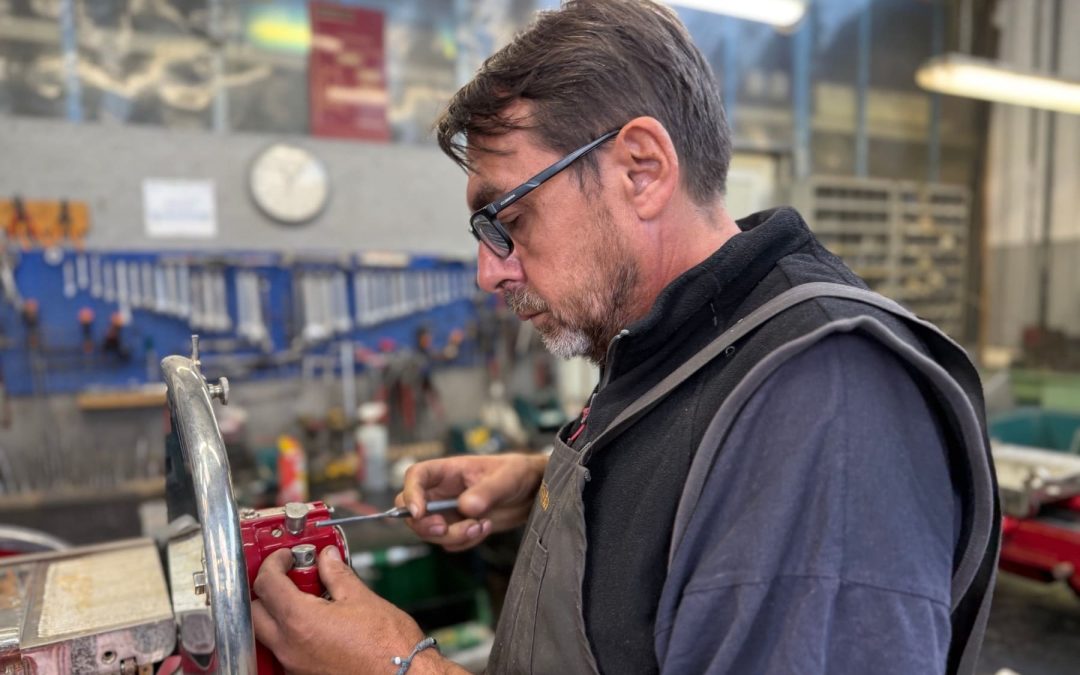
At Original Slicers, the team carries out the entire restoration process in-house, allowing us to ensure the machine’s originality throughout the work, down to its individual components.
Can an antique Berkel slicer be an investment over time?
Growing interest in collectable objects naturally raises questions about their ability to retain or increase their value.
For vintage Berkel slicers, collectable value should be distinguished from a financial investment. A historic machine does not automatically appreciate in value, and different models can follow different paths.
It is therefore more accurate to consider how particular models have become increasingly significant to collectors over the years.
Frequently asked questions about vintage Berkel slicer value
Does restoration increase the value of a Berkel slicer?
Yes. In our experience, restoring a historic Berkel slicer has always increased its value. The extent of that increase varies according to the model, its year of manufacture and its condition before restoration.
Would you like to know more about your vintage Berkel slicer?
Every Berkel has its own history and specific characteristics. Original Slicers can examine the model and condition of your machine to provide an individual assessment.